





Experience in choosing suitable cable tray accessories
The increasing demand for cable tray systems in construction projects has led to careful consideration of the accompanying cable tray accessories. But how do you know which accessories are suitable for your cable tray? What are the accessory standards? Bestray will answer all your questions in this article.
1. What are cable tray accessories?
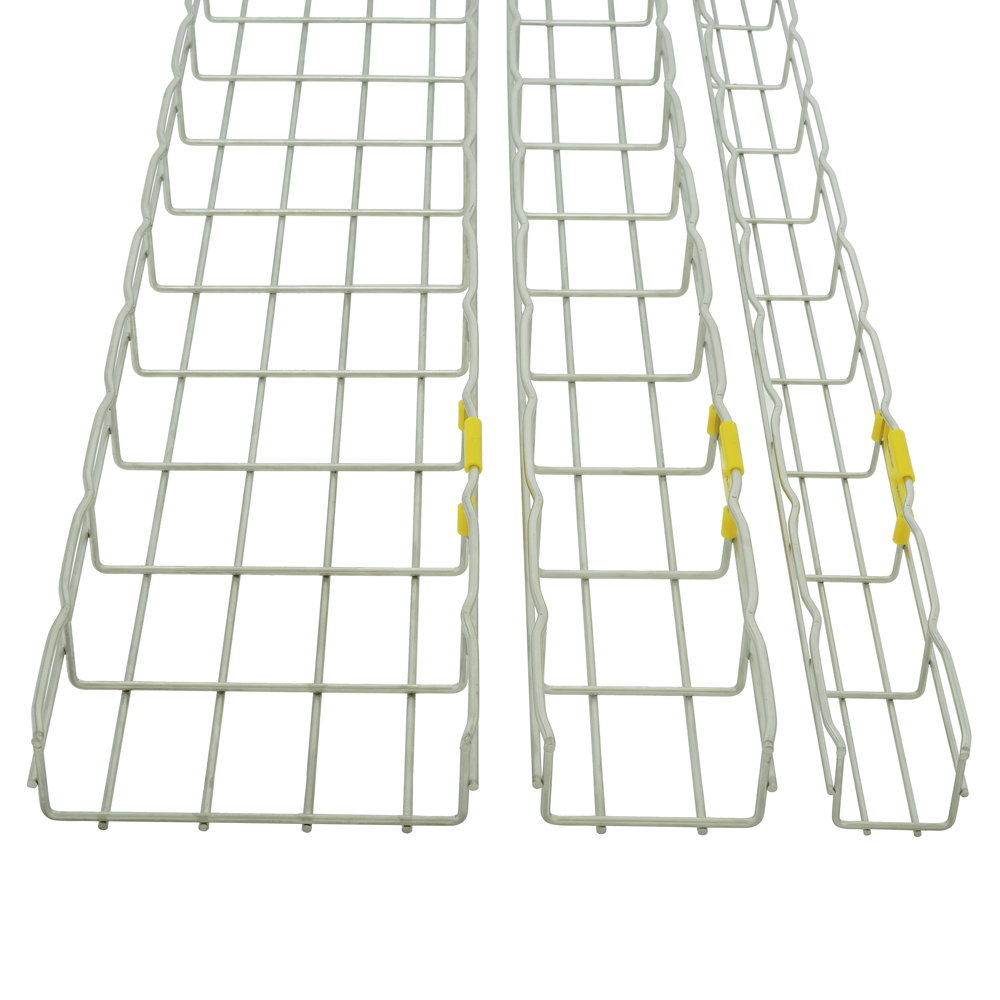
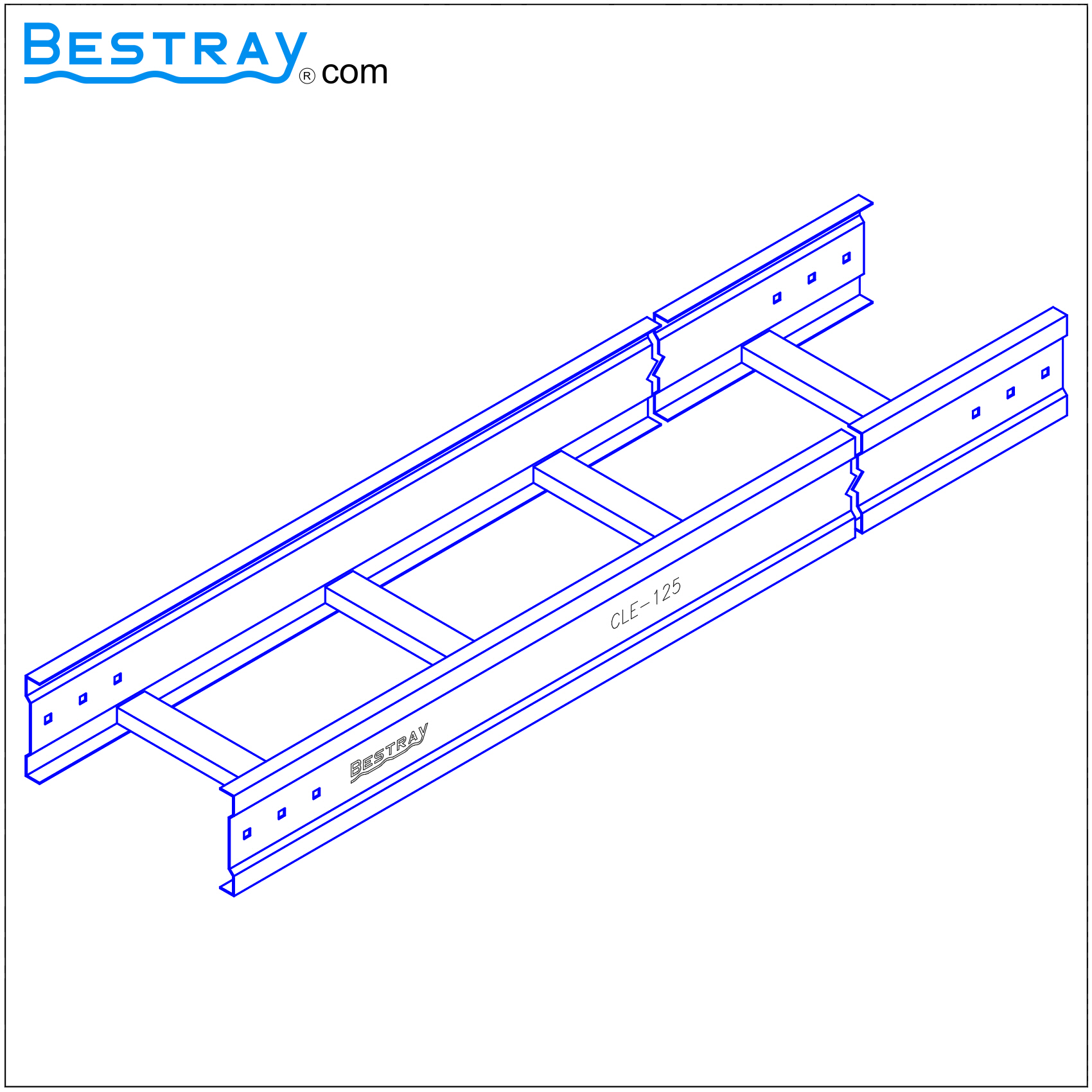
When referring to cable tray accessories, it means various types of 45°/90° horizontal elbows, 45°/90° upward elbows, 45°/90° downward elbows, three-way connectors, four-way connectors, straight reducers, etc. In the Vietnamese standard TCVN 10688:2015 (IEC 61537:2006), Section 3.5 refers to “Fittings” and defines them as “System components used to connect, change direction, change size, or terminate sections of cable trays or cable ladders.”
Cable tray accessories are accompanying devices that support the proper functioning of cable trays. Their main function is to connect cable trays together in different shapes and configurations to suit the installation location.
Cable tray accessories are usually sold together with cable trays to help customers easily purchase a complete set of suitable cable trays.
2. What are cable tray accessories used for?
Cable tray accessories typically account for 10% to 30% of the order value, but play a crucial role in the installation of cable tray systems for buildings. In addition, they facilitate easy redirection of the cable tray system.
They prevent collisions with other systems in the building during installation, reduce costs to an optimal level, and come in various sizes to suit different building dimensions.
The outstanding uses of cable tray accessories are as follows:
- Make sure the connection to the cable tray system is secure and stable.
- It plays a crucial role in ensuring the safety of the system during construction.
- Saves time and effort in construction and installation.
- Saves construction space and is highly practical.
- Diverse designs, high load-bearing capacity, and high aesthetic appeal for construction projects.
3. Classification of cable tray accessories and installation accessories
3.1. Connector
Cable tray connectors are accessories used to join two sections of cable tray together, between a section of cable tray and its accompanying accessories, or between two accessories. These accessories make the cable tray system more secure and safer. Currently, there are two types of cable tray connectors: detachable and integral.
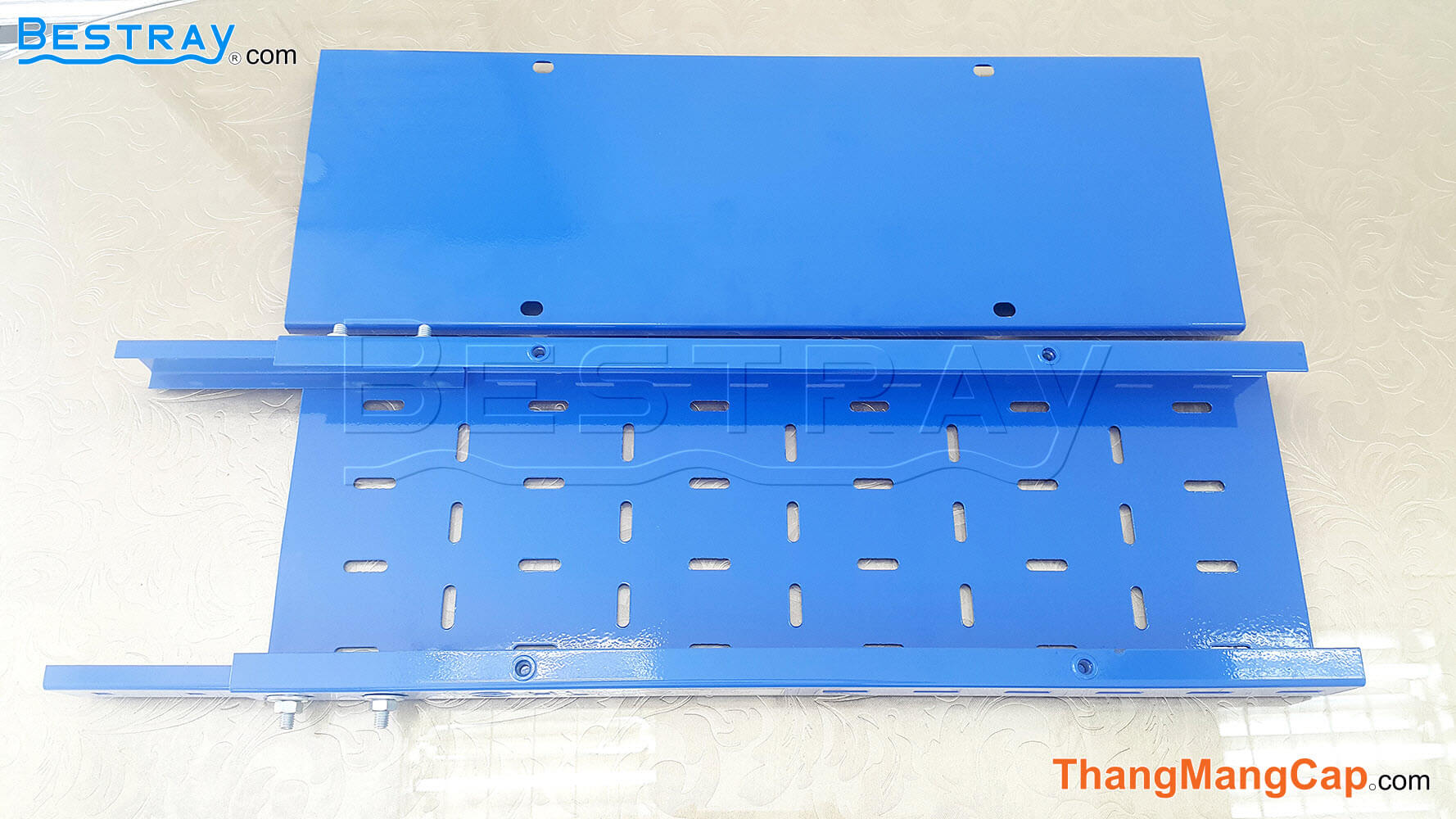
Cable tray connectors include:
- Vertical hinged connectors (vertical adjustable connectors): used to connect cable trays together vertically, adjustable on-site.
- Horizontal hinged connector (horizontal adjustment connector): an accessory used to connect cable trays together horizontally, customizable on-site.
- Left-hand reducer (a term used to refer to a reducing connector, oriented straight to the left): its purpose is to reduce the size of the cable tray to the left.
- Right-hand reducer connector (a term used to refer to a reducing joint, oriented straight to the right): its function is to support reducing the size of the cable tray to the right.
- Equal reducer connector: This is an accessory used to connect two cable trays of different sizes. It can also be used to connect two sections of cable tray and other accessories.
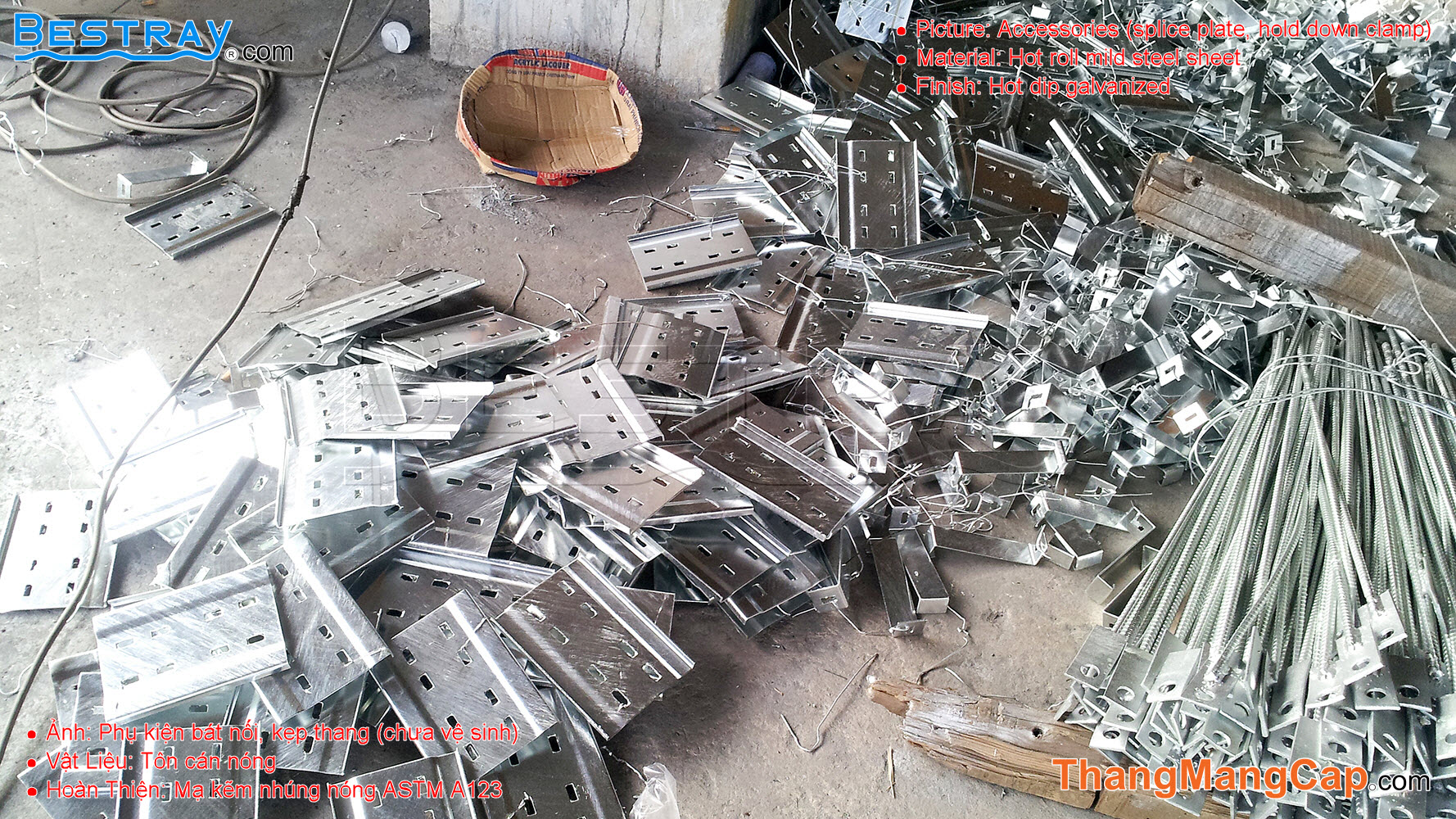
Connecting brackets, ladder clamps
3.2. Lid
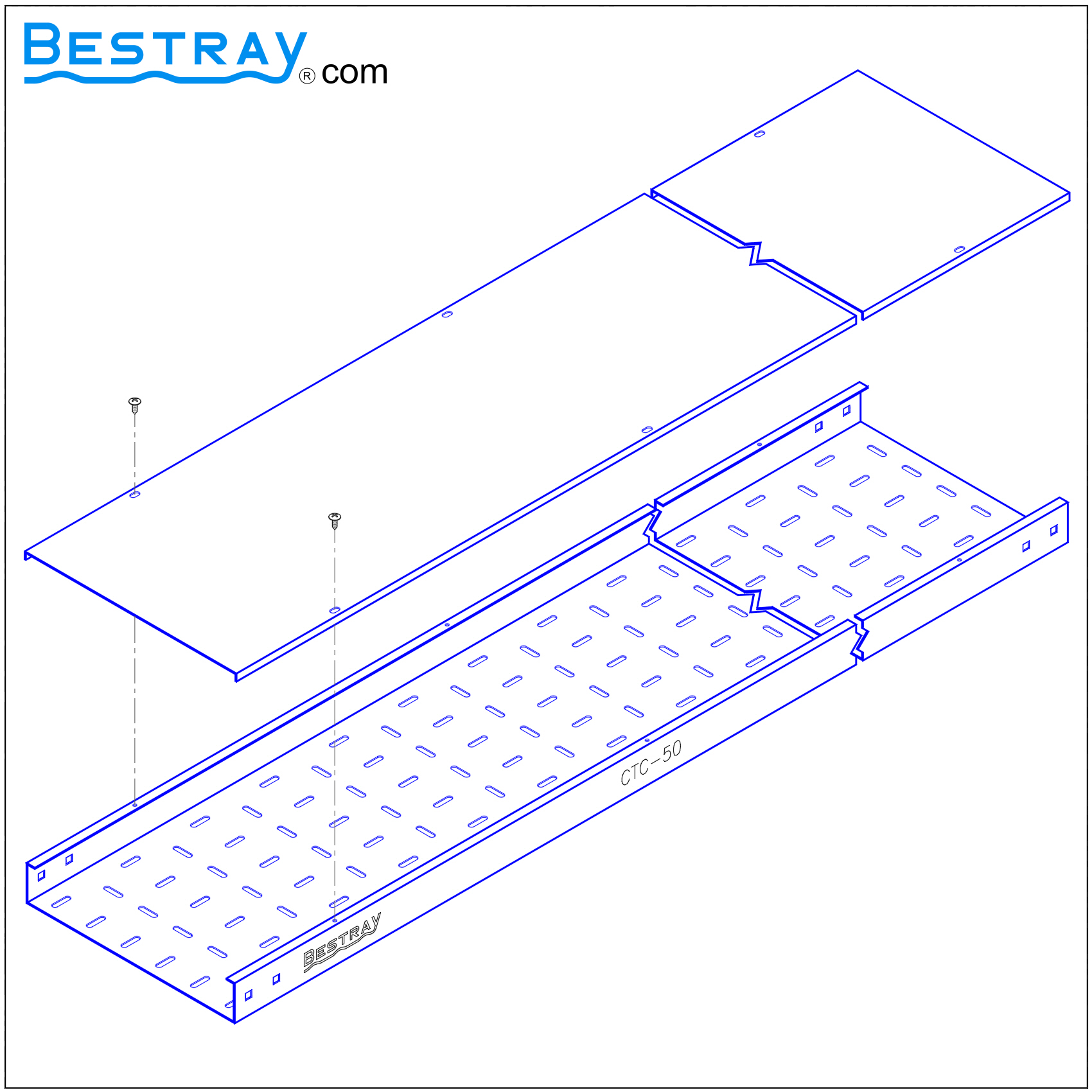
Cable tray covers are used to seal cable trays, protect the wires and cables inside. They also protect the wires from insects and external environmental factors.
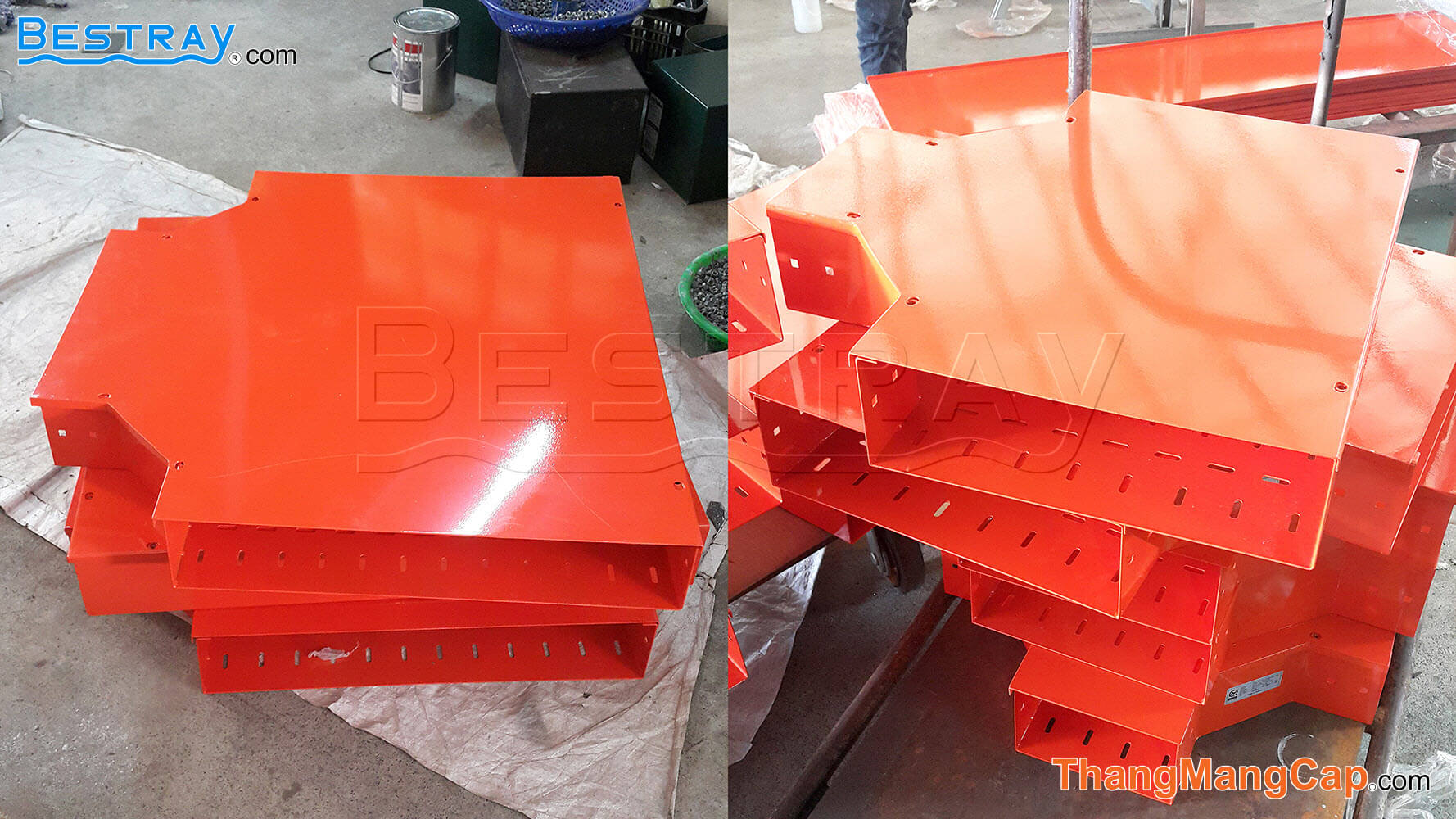
Each type of cover has its own design and specifications to suit the environment of each construction project. Therefore, the selection of a cover requires consideration of the characteristics of the construction project and the surface to be covered. In addition, the cable tray cover must have dimensions and shapes that match the cable tray system of the project. Typically, cable tray covers are classified according to the material they are made of as follows:
- Galvanized steel cable tray covers (zinc-coated sheet metal): used for indoor installation in dry, well-ventilated areas. This product has the advantage of a smooth, uniform zinc finish, good aesthetics, and resistance to external factors such as dust and insects. With a reasonable price, it is a popular choice among many customers.
- Hot-dip galvanized cable tray covers are widely used in construction projects, both indoors and outdoors. They are primarily used in projects requiring high technical standards and product specifications. Therefore, these cable tray covers are often used in projects near the sea, chemical plants, and environments with high alkalinity, etc…
- Powder-coated cable tray covers: This is an affordable and widely used material that resists rust. The covers are typically made of sheet metal, then surface-treated before powder coating. This ensures the paint adheres well to the surface, protecting against external environmental factors. They are commonly used in buildings, corridors, and vertical shafts. Additionally, the color of the cable tray is used to mark and differentiate cable routes and categorize cable systems in construction projects.
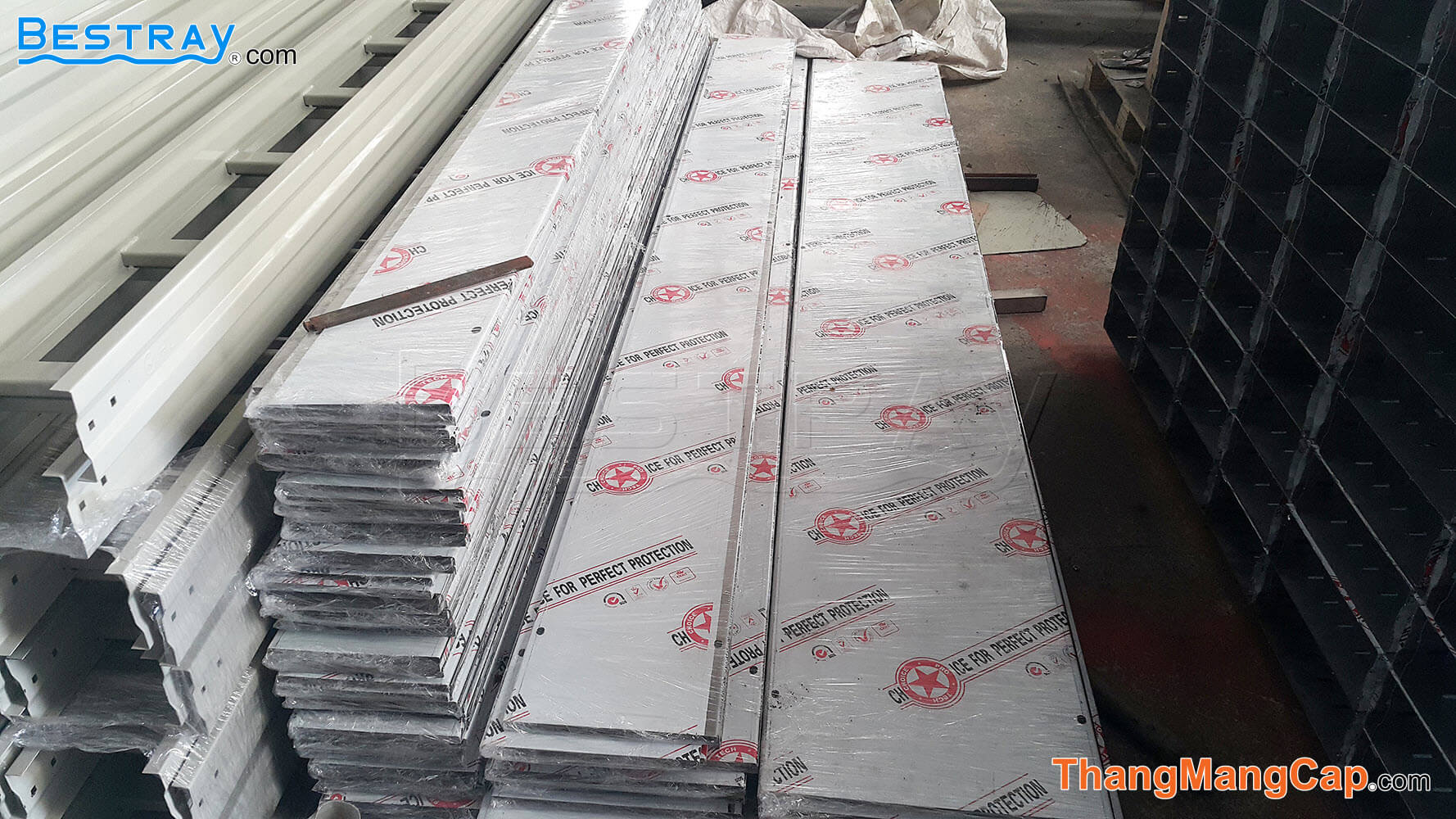
- Stainless steel cable tray covers: Made from stainless steel, they are rust-resistant, corrosion-resistant, and highly durable. They are generally suitable for use in a variety of environments.
3.3. Support bracket (Support mechanism):
In Vietnamese standard TCVN 10688:2015 (IEC 61537:2006), Section 3.7 defines a “support device” as “a system component designed to mechanically support and restrict the movement of cable runs.”
In construction projects, supports are part of the construction process that helps to support cable tray and conduit systems. They play a role in connecting and shaping the components of cable trays and conduits together.
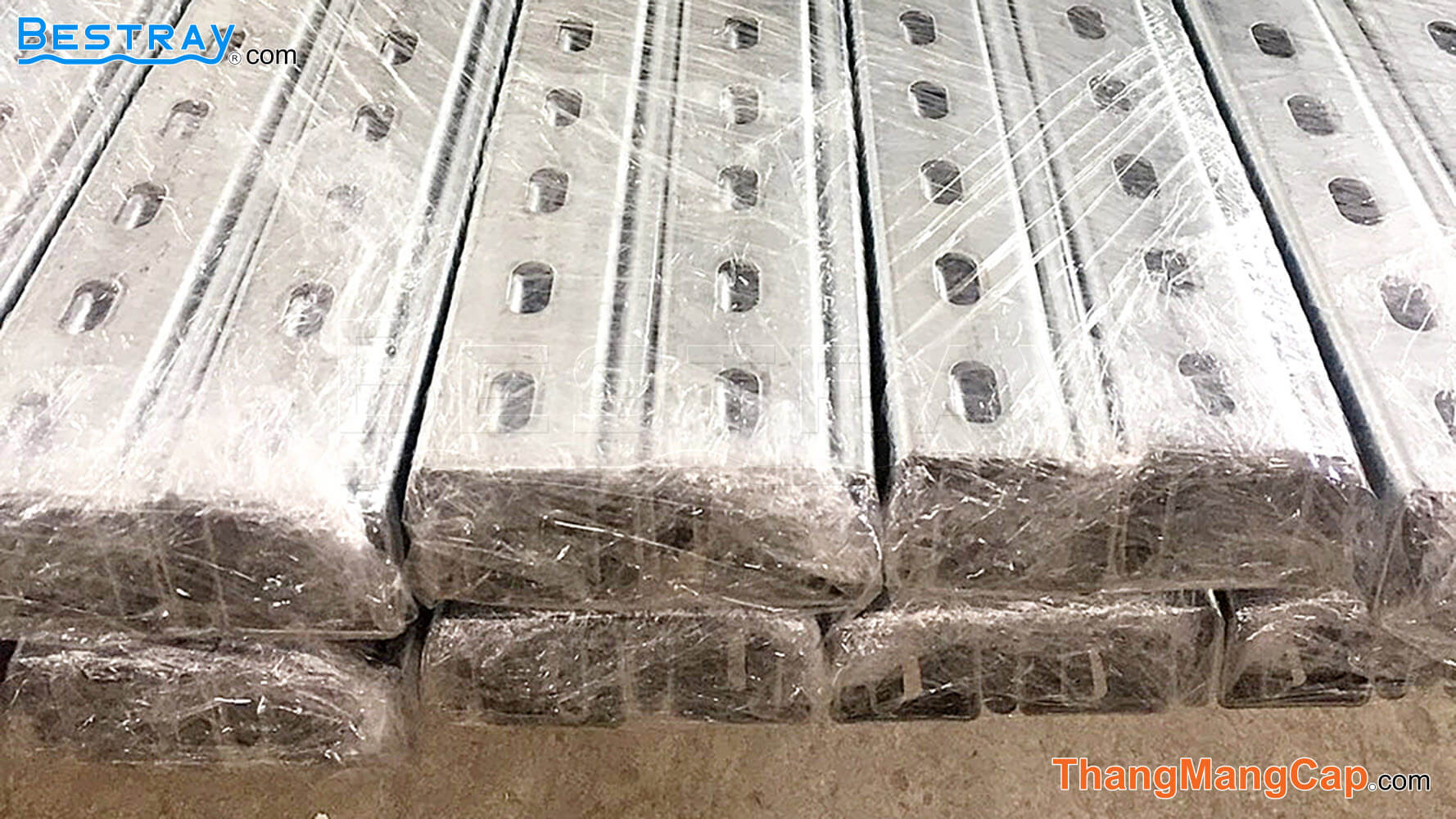
The support structure in a cable tray system includes:
- Support rods: used to support cable trays on concrete ceilings.
- V-shaped brackets: used to support ladders, conduits, and cable trays using threaded rods at both ends.
- Cable tray brackets – Eke: used to support cable trays, conduits, and trays that run close to the wall.
- End Cap: Used to cover the open ends of cable trays and conduits.
- Wall-mounted cable tray support brackets: used to fix and support trays and cable ladders when running close to the wall.
- Support legs: used to support the cable tray system at a fixed distance from the floor.
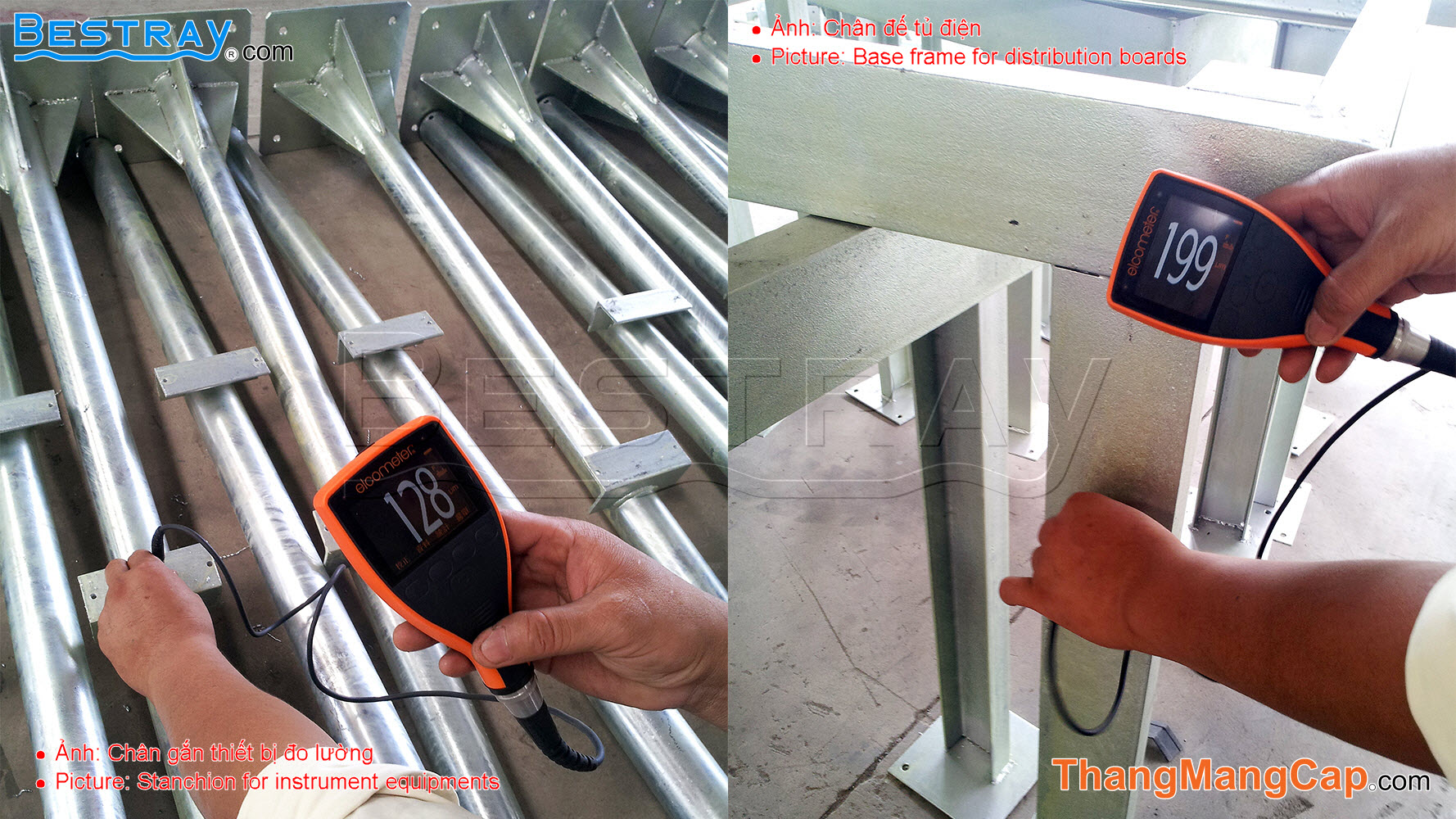
Cable tray support
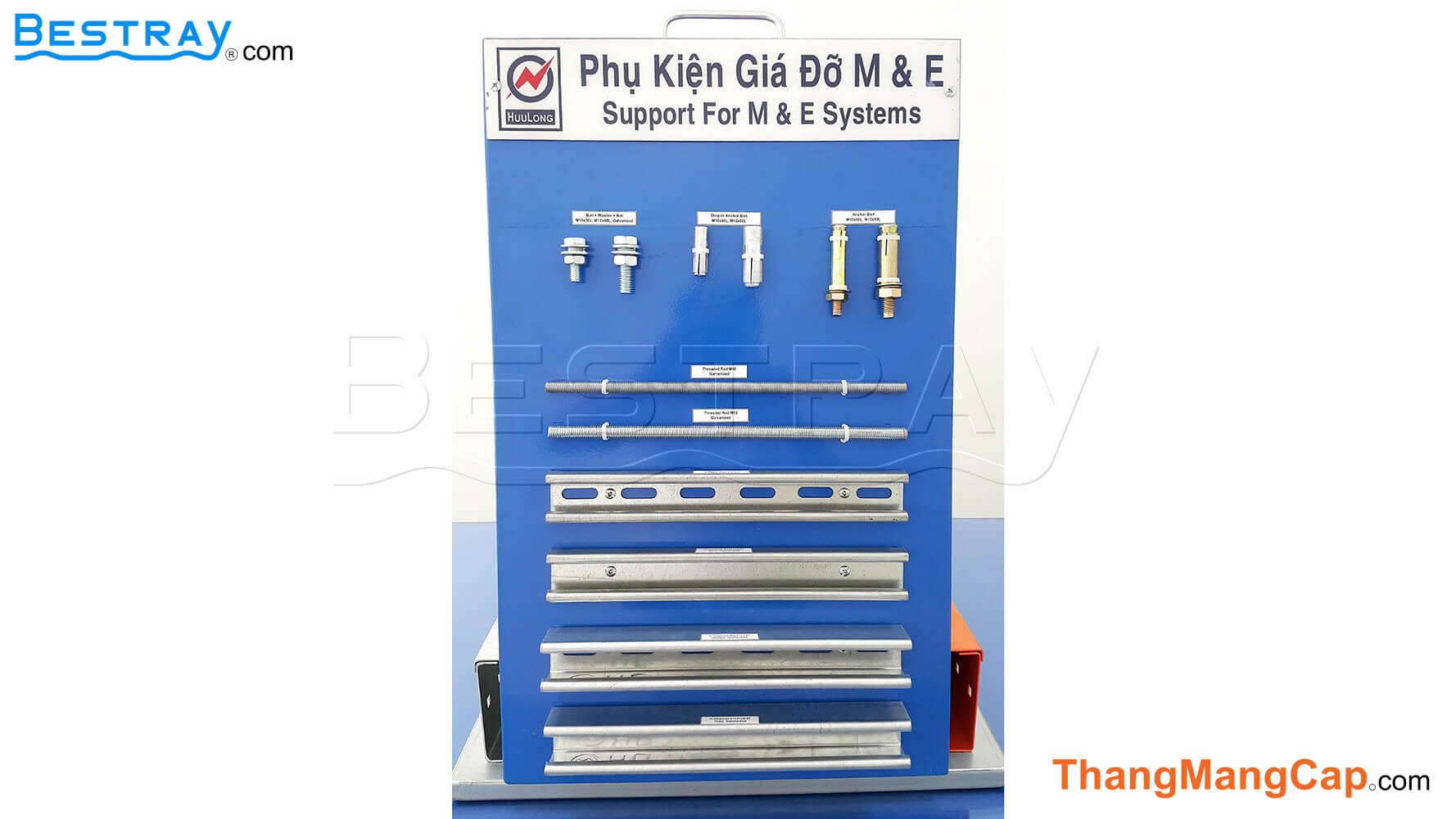
- Perforated multi-purpose support bars (U-shaped bars, C-shaped bars): These are specialized devices used as supports for cable tray systems and pipe suspension in construction projects. The accessories are attached with bolts and screws, allowing for quick assembly with various tools.
- Multipurpose non-perforated support bars: Made from electroplated steel or powder-coated steel with a thickness of approximately 2.0 – 2.5mm. The product is designed for flexibility, easy installation and removal, requires no welding, and can withstand the heavy weight of the structure.
3.4. Clamps
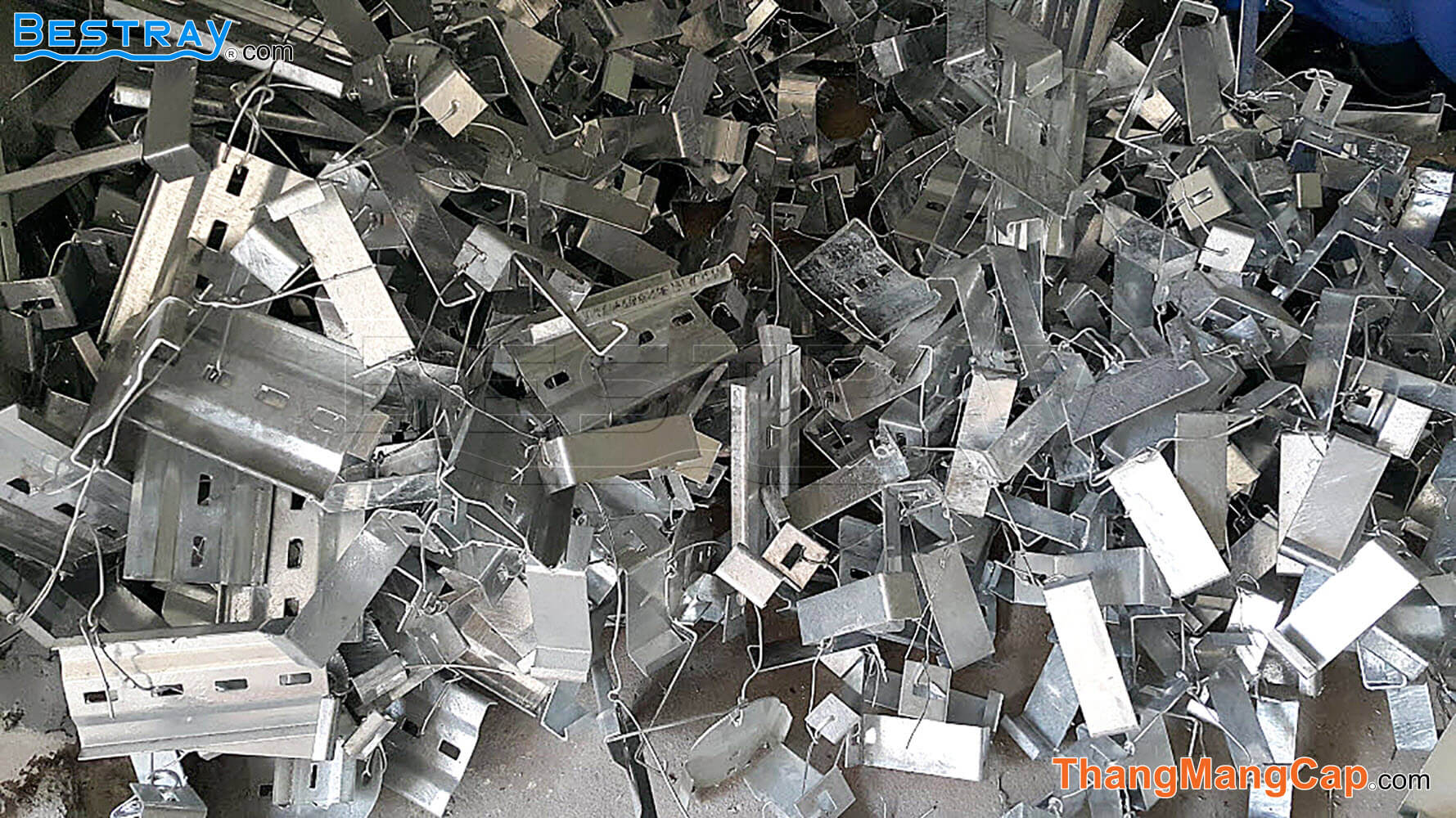
Cable tray clamps are a product line within the cable tray accessories category. These devices are used to secure cable trays, supports, and concrete floors.
They help make the cable tray system safer, reducing risks and hazards during construction and use. There are two types of clamps: double-clamp and single-clamp.
- Cable Ladder Clamps: Their main function is to secure cable trays to perpendicular surfaces such as walls, concrete floors, U-shaped bars, etc. The product helps reinforce the cable tray system, preventing unwanted movement, tilting, or distortion.
- Pipe hangers are used to connect pipes to pipe hanger assemblies, ensuring that electrical cables and conduits are securely fastened. The hangers are typically made of 304 stainless steel, 316 stainless steel, or galvanized steel, offering good corrosion resistance.
- Clamps: These are used to secure cable trays to concrete floors, supports, or V-shaped profiles, etc. The size of the clamp depends on the size of the cable tray.
3.5. Co
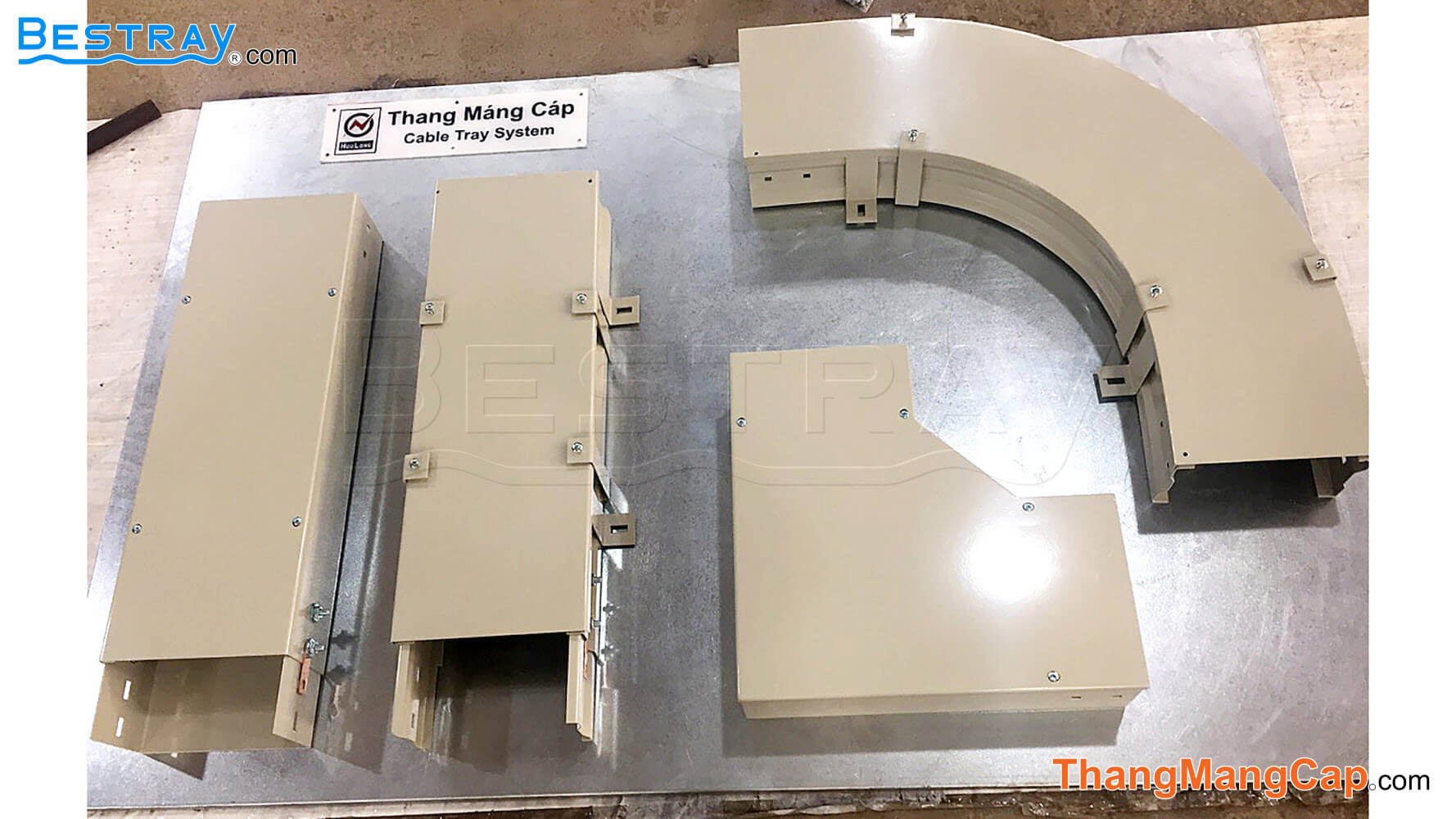
Cable tray elbows are accessories used in factories, high-rise buildings, manufacturing plants, residential complexes, etc. The main function of cable tray elbows is to redirect the cable tray’s path according to the building’s design.
- Upward bend (or belly bend): This is an accessory used to redirect the cable tray system perpendicular to the original plane and in an upward direction.
- Downward bend (back bend, outer bend): This is also an accessory used to redirect the cable tray system perpendicular to the original plane and in a downward direction.
- Horizontal elbow (L-shaped elbow): This type of accessory is used to quickly change the direction of the cable tray system at a right angle on the same plane.
- T-connector (three-way connector): This accessory divides the gutter system into three directions on the same plane.
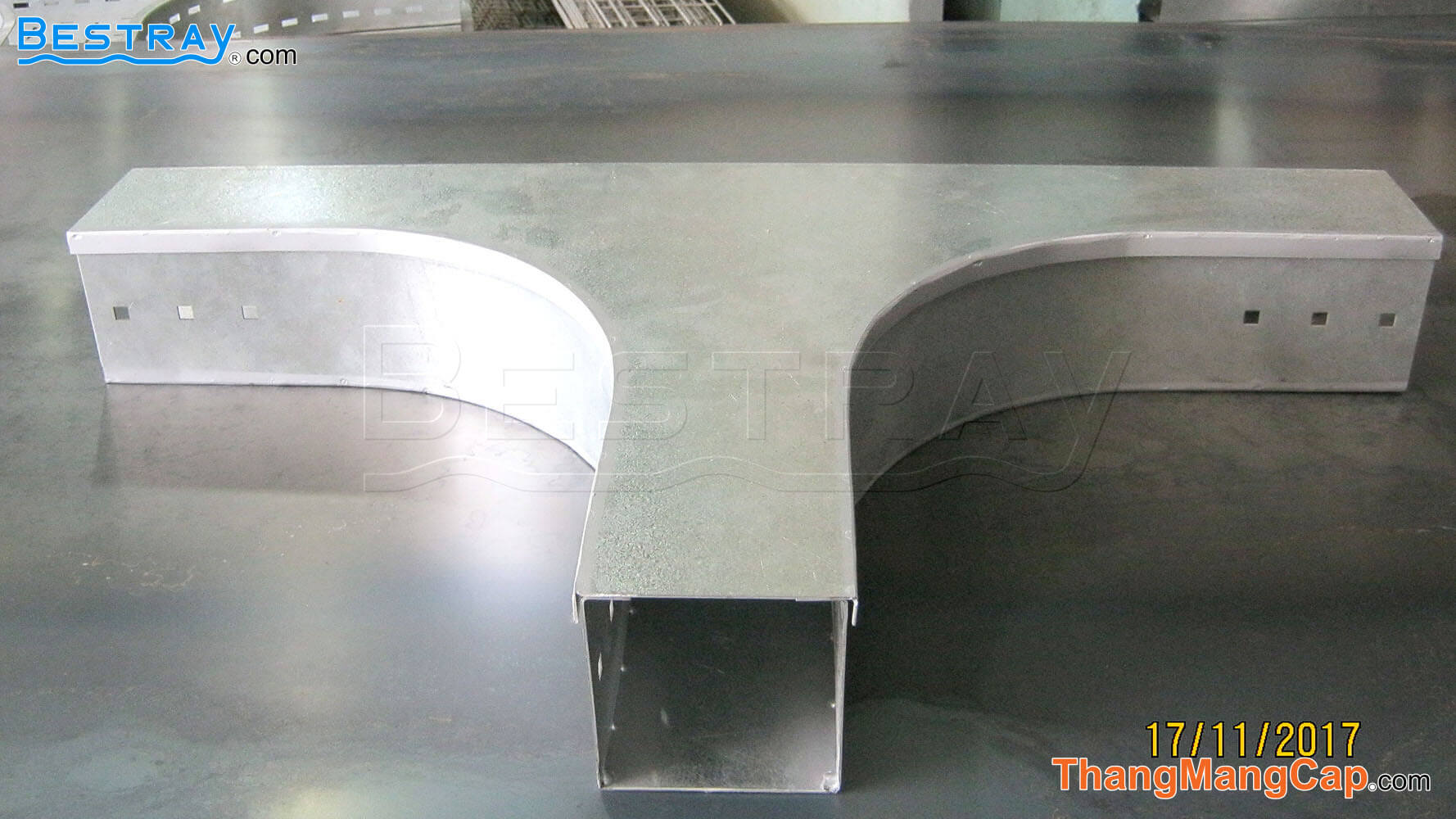
- A cross-branch (cable tray) serves to divide the cable tray system into four directions on the same plane.
3.6. Hanging
Cable tray hangers serve a similar purpose to brackets. They help to securely and safely support the cable tray system at a height. Currently, there are three common types of hangers:
- Suspension brackets: used to hang ladders, cable trays, and conduits from the ceilings of houses, factories, high-rise buildings, apartments, etc…
- Cable tray hangers: used to hang cable trays; this type is usually used with small cable trays because they only require one threaded rod for suspension.
- Cable tray/conduit support arms: used to suspend cable trays, conduits, and cable trays when installing cable tray systems on the ceiling. This device uses a support arm instead of threaded rods and V-shaped supports.
4. Accessory installation standards
The National Standard TCVN 9208:2012 (replacing standard TCXDVN 263:2002) of the Ministry of Science and Technology stipulates the standards for installing cable tray accessories for cable tray systems as follows:
- Where necessary, cable tray and ladder systems must be installed along with cable tray elbows, cable tray connectors, tees, cross connectors, reducers, tray covers, and other cable tray accessories.
- Cable trays or ladders with a width greater than 1200mm must have supports or hangers every 1m – 3m. Furthermore, these supports must be approved by the competent authority before construction begins.
- The top cover of the tray, cable ladder, and additional protective devices must be easily removable.
- The positions of the hooks and brackets must be carefully marked to conform to the originally approved specifications.
- Brackets and suspension systems must be secured to building structures or welded to steel reinforcement embedded in the concrete ceiling structure.
- Each cable tray or cable ladder must be in an extended position on its supports or hangers.
- Where cables run from cable trays/ladders into conduits or other protective coverings, sturdy supports must be provided to prevent tension from acting on the cables.
- Before installing the trays, cable ladders, and accompanying accessories, a thorough inspection is necessary to ensure there are no electrical or mechanical problems.
5. Manufacturing and installation of cable tray accessories at Bestray
5.1 Production of cable tray accessories
Bestray owns a fully automated production facility with ample material storage space, meeting high safety and quality standards. Along with a modern, automated machinery system imported from abroad, it ensures a production line that meets international standards. Furthermore, the high machine efficiency guarantees the ability to fulfill large orders as required by our customers.
- Material selection: all products are manufactured from materials such as sheet metal, stainless steel, aluminum, etc., depending on customer requirements. Additionally, products are produced with a standard metal thickness of 1.0mm to 2.0mm.
- Choose the size and style that best suits your cable tray system. Bestray cable tray accessories prevent collisions with other systems in your home or factory during installation.
- The product helps reduce costs while offering the best value for customers. It ensures relatively high aesthetic appeal, with a variety of designs and sizes to suit the cable tray systems of many projects.
Our company is trusted and widely known for its cable tray accessories made from the best quality stainless steel and galvanized iron. All products undergo thorough testing and verification before being released to the market. The equipment is corrosion-resistant and has very high tensile strength. We manufacture these accessories to standard specifications as well as custom designs.
5.2 Cable tray accessory installation procedure:
Each construction project will have a different cable tray system. Thoroughly understanding the general installation process of cable trays is crucial to ensure the project proceeds on schedule. Here are 7 important steps when installing cable tray accessories for a construction project:
Step 1: Determine the cable tray routes according to the construction drawings. Next, determine the dimensions from the reference axis to the installation site. Then, mark the installation locations of the control tray components (corners, ends, branches) and the route dimensions according to the actual details (up/down points, branches, changes in direction, etc.). From there, determine the cable tray suspension points and the locations where drilling or creating technical holes on the structure is necessary.
Step 2: Drill or weld into the structure to install expansion bolts and attach suspension or support brackets at the marked locations. Simultaneously, ensure the cable tray is straight and aligned with the pre-determined axes. Next, drill or bore holes through the structure at the pre-marked locations. Finish the drilled holes by filling in the surface, sanding smooth, or touching up with paint.
Step 3: Install the cable trays on the pre-installed supports according to the design in the following order: install the end pieces, corners, and branches first, then install the straight sections connecting these pieces together. Note: for straight sections of cable tray, the steel edges of the cuts must be sanded or touch-up paint applied before continuing to connect the next section to the already installed cable tray.
Step 4: Connect the equipotential wires at the cable tray connection points as requested by the customer. Next, install the shields, support structures, and fill the gaps at locations penetrating the building structure according to technical requirements.
Step 5: Inspect and complete the installed cable tray system: check the height, the order of the tray layers, the distance between layers and the standard axis, the horizontal or vertical alignment, and ensure stability and no deformation. In addition, check, supplement, and tighten the cable tray connecting bolts. To ensure safety, sharp edges and cuts on the gutter should be removed, and those areas should be repainted.
Step 6: Inspect and mark the completed cable tray route on the construction drawings. Additionally, consult with a consultant for inspection and acceptance using a construction acceptance form. Then, clean up any excess materials and keep the construction area tidy.
Step 7: After all cable pulling work is completed, continue to inspect and repair any misaligned cable trays caused by construction before installing the cable tray covers.
6. Bestray Company
Bestray has always been a reputable address specializing in the production and supply of high-quality cable trays and conduits in the market. With over 15 years of accumulated experience, we hope to bring our customers the best product lines.
Our cable tray accessories are highly regarded for their design, style, and reasonable price. Furthermore, Bestray has a team of professional, dedicated, and experienced staff, along with modern machinery and technology, to always deliver perfect results for your projects.
Bestray always provides cable trays and accessories with complete, clear, and direct sourcing, without intermediaries, at prices suitable for your project. For detailed product information or further advice, please contact us for a quote today.
Learn more about our products:
- Mesh trough
- Cable tray
- Cable ladder
- Cable tray

——————————————————————————————
Bestray Joint Stock Company – Specializing in the Production of Cable Trays and Cable Trunking
- Address: 180/7B, Tan Thoi 3 Hamlet, Hoc Mon Commune, Ho Chi Minh City, Vietnam
- Phone: (028) 3713 3076 – 078 453 1668 – 0909 089 678
- E-mail: sales@bestray